
get £100 off from june 16 – june 30

00
days
:
00
hours
:
00
minutes
:
00
seconds

The Soccer Philosophy

Technical excellence is key to a footballer’s development.

It is the belief the whole of MPFC is built on, and this page explains
exactly how Saul turns it into a session.

WHERE IT STARTS

There is no magic formula.
There are attributes.

Saul has said it the same way for twenty years. There is no magic formula to being a professional footballer, but there
are attributes that every great footballer displays. The job of a development programme is to build those attributes
deliberately, in an order that makes sense, rather than hoping they turn up on their own.

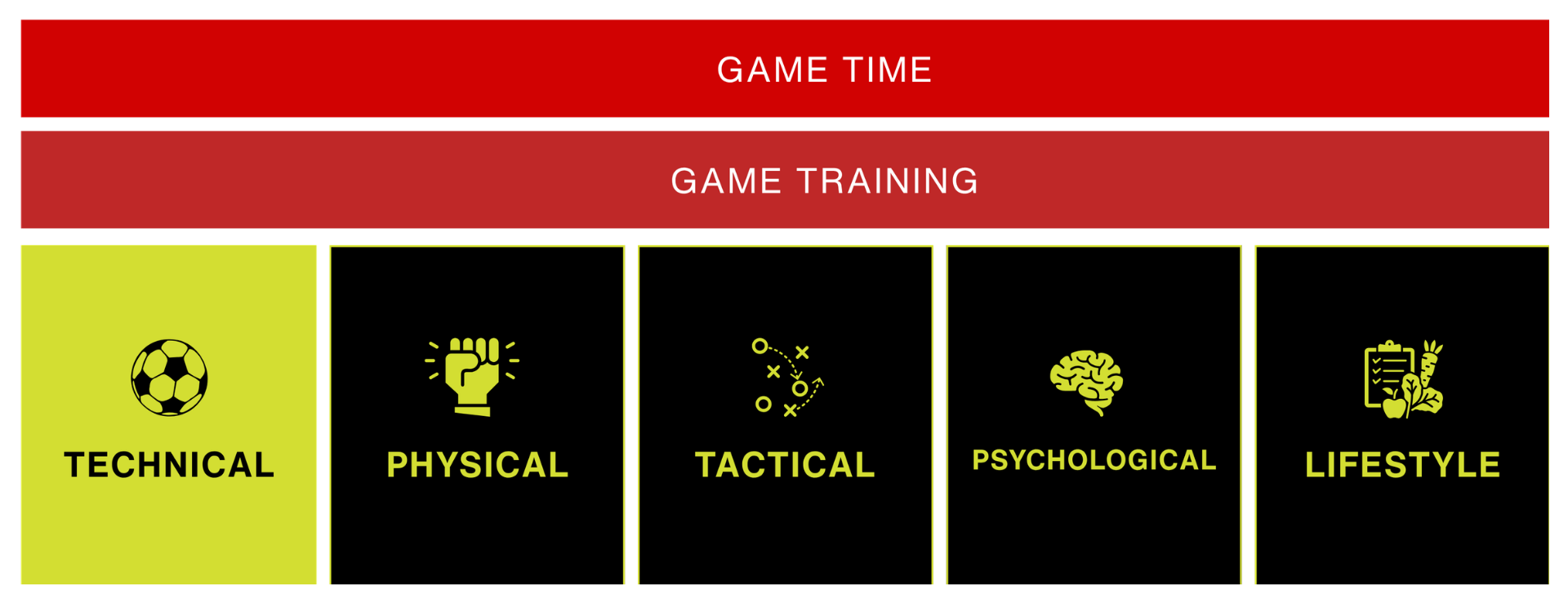
The attributes break down into five building blocks. Every player has all five in varying degrees, and the level they
reach is decided by how those five combine. One of them carries more weight than the rest.

THE BUILDING BLOCKS

Five blocks. One of them holds the rest up.

The five building blocks every player possesses in varying degrees, and
which determine the level at which they play.

Game Time

Game Training

Technical

Technical

Beating a player, striking a ball, a reliable first touch

Physical

Physical

Agility, balance, coordination, speed, and the strength to keep competing

Tactical

Tactical

Scanning, positioning, and the speed a decision is actually made

Psychological

Psychological

Confidence under pressure, composure, and recovery after a bad mistake

Lifestyle

Lifestyle

Sleep, nutrition, recovery and the discipline away from the pitch

THE COMPLETE PLAYER

Technique gets a player noticed.
The rest keeps them there.

The technical block is the most vital, and it is not the only one. A player can be the best technician in the squad and still get released, because academies keep complete players rather than the most skilful one. Pace exposes a slow player. Pressure exposes a player with no composure. A missing routine away from the pitch shows up by February.

This is why the MPFC app carries libraries for mindset, physical work, scouting and nutrition alongside the technical programmes, and why the Individual Development Plan assesses every attribute rather than only the ones a player enjoys.

THE TECHNICAL EXCELLENCE CYCLE

Three phases. One direction.

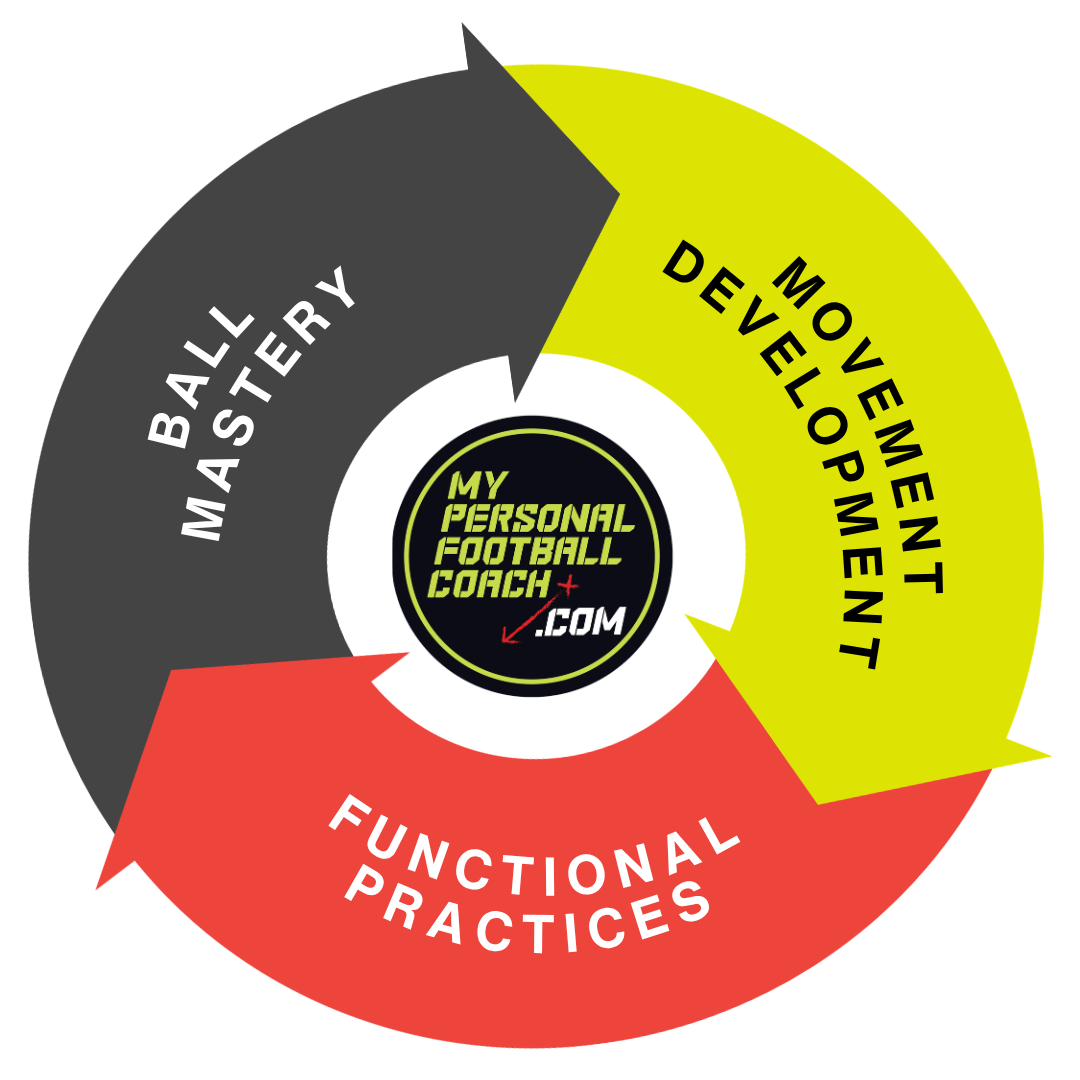
The Technical Excellence Cycle is Saul’s own model, created from over ten years of teaching hundreds of players of varying standards in multiple countries. It blends the core technical skills like touch and control, adds dynamic and explosive movement, then puts both into functional practices that demand a decision.

It is a cycle rather than a ladder. A player never finishes ball mastery and moves on. Each phase keeps loading the one in front of it, which is why the work compounds over a season instead of resetting every time a new drill gets introduced.

Phase One

BALL MASTERY

Thousands of touches,
on both feet.

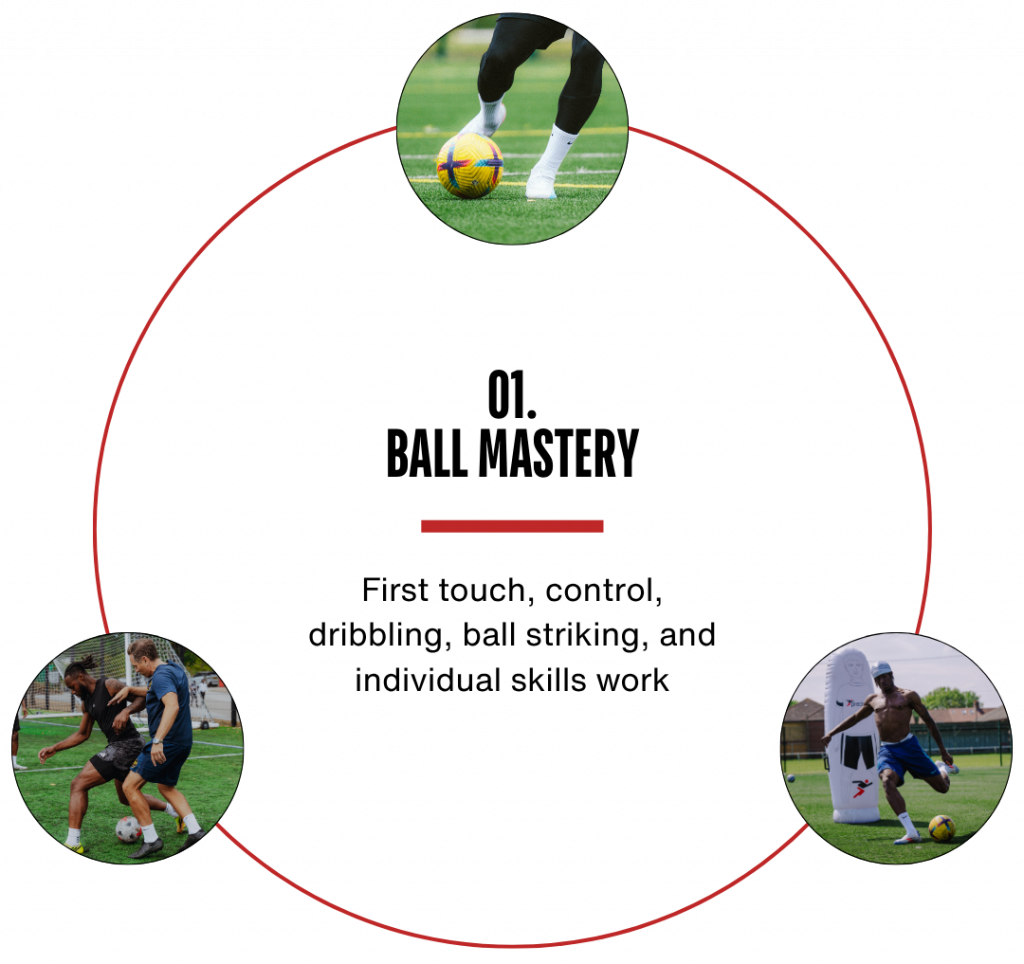
Ball mastery is first touch and control, dribbling, ball striking and individual skills. It is the phase most players skip, because it looks basic and it is repetitive, and it is the phase that decides whether anything in phase three actually works. A touch that holds up in an empty space and breaks when the ball arrives at pace is not a touch a player can use on Saturday.

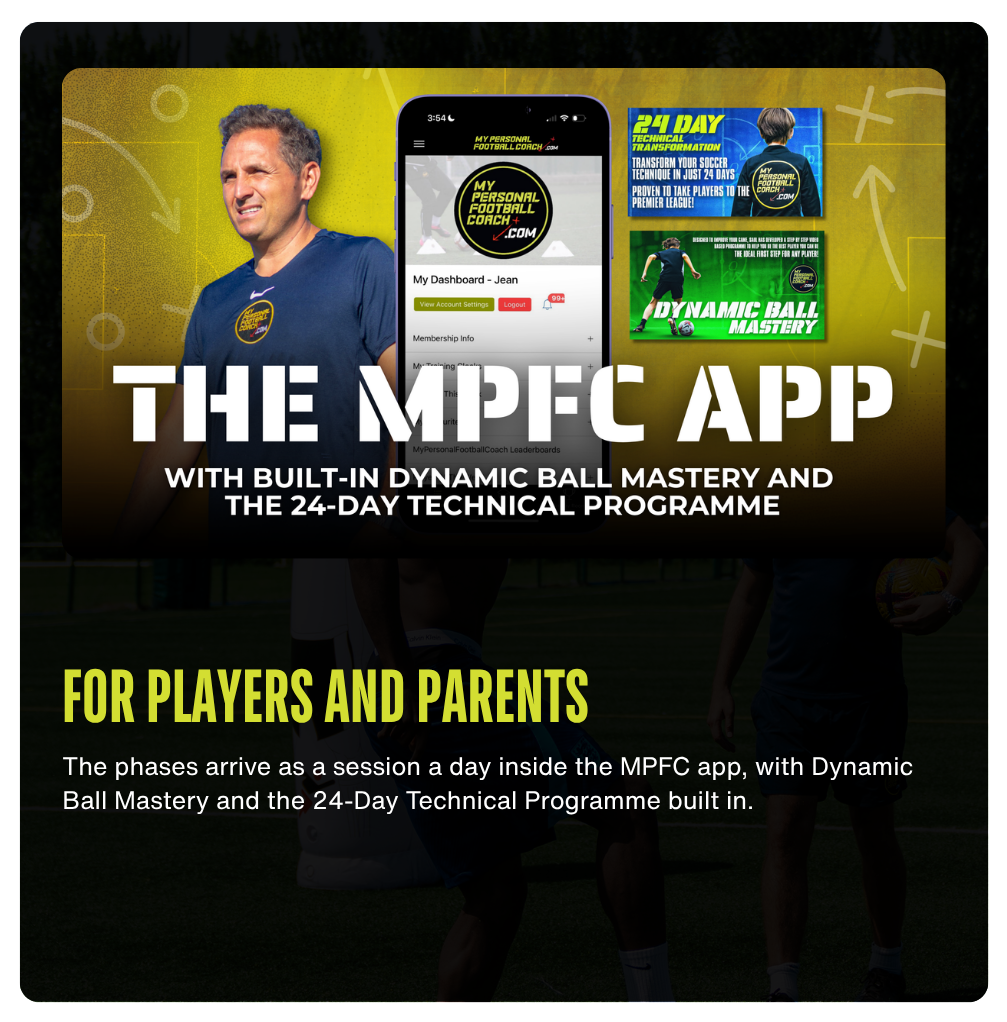
Saul’s Dynamic Ball Mastery programme is the version of this phase a player can run on their own. It is an individual technical programme that encompasses all the facets of the Technical Excellence Cycle, showing players how to develop their technical ability in a fun, dynamic and impactful way.

Phase Two

BALL MASTERY

The movement that makes the
technique usable.

Phase two is turning, running with the ball, body positioning and dynamic, explosive movement. A player who can manipulate a ball standing still and cannot turn away from pressure at speed has half a skill. This phase joins the two together, so the technique holds when the player is moving and somebody is arriving.

It is also where the detail lives that most sessions never reach. Which foot the player plants on. How open the body is before the ball gets there. Whether the first movement takes them away from pressure or into it.

Phase Three

BALL MASTERY

The movement that makes the
technique usable.

Phase two is turning, running with the ball, body positioning and dynamic, explosive movement. A player who can manipulate a ball standing still and cannot turn away from pressure at speed has half a skill. This phase joins the two together, so the technique holds when the player is moving and somebody is arriving.

It is also where the detail lives that most sessions never reach. Which foot the player plants on. How open the body is before the ball gets there. Whether the first movement takes them away from pressure or into it.

WATCH THE METHOD

The phases, filmed on the grass.

The session video and the diagrams behind the method, plus the free
training library Saul already publishes.

Image 1
Image 2
Image 3
01

Individual Soccer
Training Drills

Team training is only a few hours each week. Practise.

02

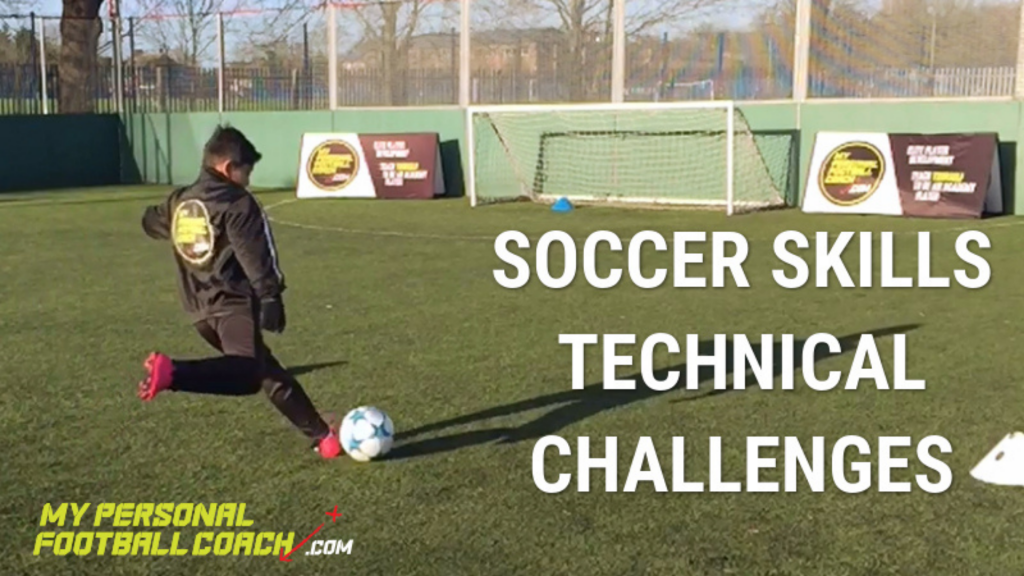
Soccer Skills Technical
Challenges

Challenges designed from elite academies, each with a specific outcome.

03

The MPFC YouTube
Channel

Every session clip Saul has published, in one single place.

THE PRINCIPLES

The standards that run
through all three phases.

Two coaches can run the same drill and develop completely different
players. These five principles are the difference.

01

Every Touch Has A Purpose

A drill without an objective is just activity dressed up.

02

Both Feet, Always

A player with one foot gives defenders half a problem.

03

Drive At Pressure

Players who avoid contact never learn how to beat it.

04

Connected Progression

Each phase loads what the following phase has to resolve.

05

Quality Over Volume

Fifty sharp repetitions beat three hundred sloppy ones, every time.

THE IDP

Every player gets a plan,
not a playlist.

The Individual Development Plan is the document that sits behind the whole method. It is where a player’s attributes get assessed honestly, where the priorities get set in order, and where the next block of work gets written down. It is the reason two players can be in the same session and be working on completely different things.

What it holds:

check

An honest assessment of every attribute in the player's game

check

The priorities, in order, for the next block of work

check

Individual action plans the player and coach both work from

It is the same document Saul uses with professionals. Coaches who take the 121 Coaching Course get his actual IDP, not a blank template.

WHERE THE METHOD IS TAUGHT

Two ways to put this into practice.

Master The Ball…Master The Game.

Technical excellence first, then the movement that makes it usable, then the decision
that makes it count. That is the whole method, and it is the same whether the player is
nine or playing on Saturday in front of sixty thousand.

Master The Ball…Master The Game

Individual skills coaching from Saul Isaksson-Hurst,
UEFA A Licence.

Players & Parents:

The MPFC App

Position-Specific Courses

Dynamic Ball Mastery

24-Day Technical Programme

Coaches:

121 Coaching Course

Developing the Game Changer

Elite Soccer Coaching, Level 1 & 2

The MPFC App for Coaches

MPFC:

About Saul

The Philosophy

Success Stories

Clubs

Press

Contact

Free Resources:

Blog

Podcast

Skills Challenges

Free Videos

Newsletter

© 2026 My Personal Football Coach. All rights reserved. 

Terms & Conditions · Privacy & Data Policy · Cookie Policy